
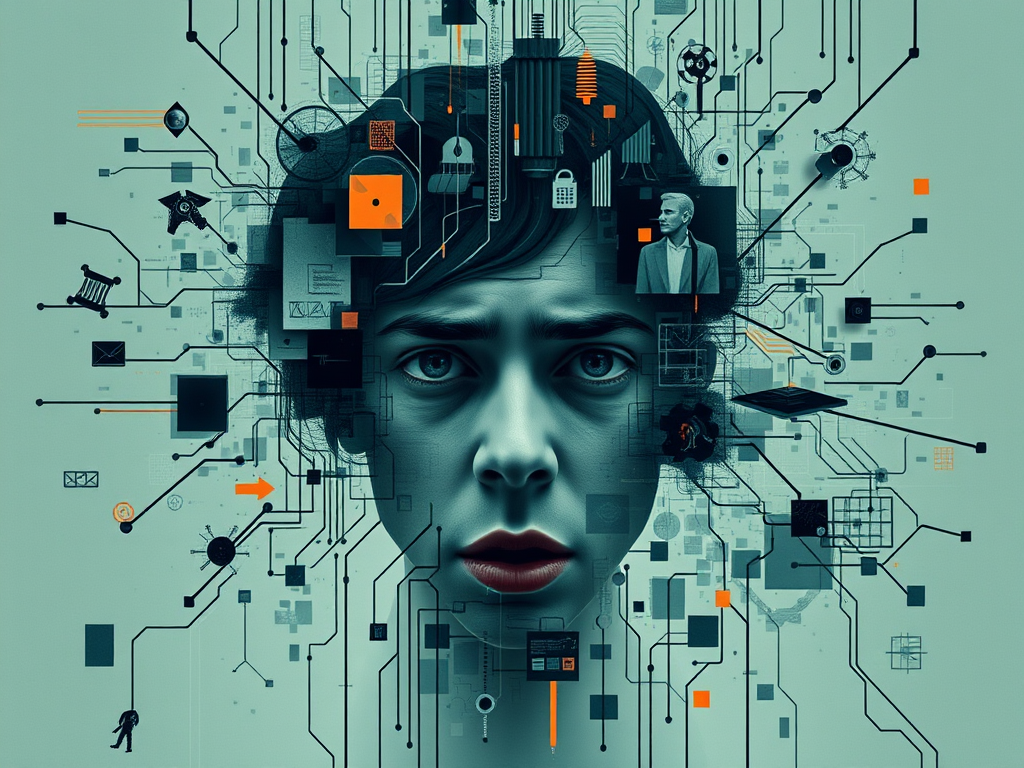
My last blog looked at the impact and experience of loneliness and links to my next topic of anxiety. “I have anxiety” is a phrase I hear often, but not always sure of the perceived interpretation. Maybe it is used to to describe how people experience the world or how they feel in certain situations. Yet, anxiety is much more than a condition or diagnosis; it is a core human emotion, just like happiness or sadness. Anxiety is such an important and complex emotion, playing a vital role in our survival, growth, and motivation.
So why do so many of us talk about anxiety as if it were an illness, virus or disease; something to be caught, treated, or cured?
What Is Anxiety, and Why Is It So Important?
Anxiety is a natural, evolutionary response designed to protect and prepare us from threat and a mechanism for survival. It helps us to anticipate risk, plan ahead, and stay alert. In its balanced form, anxiety sharpens attention, motivates action, and supports problem-solving, all essential for thriving as human beings.
Anxiety can arise as both a primary emotion (a direct reaction to a situation) and a secondary emotion (masking or amplifying other feelings such as sadness, frustration, or anger). It’s often confused with fear, but the two are different. Fear being a short-term response to a clear, immediate danger; anxiety more diffused, often rooted in uncertainty, anticipation of the future and provoked by memories of the past.
How Do We Experience Anxiety?
Anxiety is experienced through a complex interaction of thoughts, emotions, bodily sensations, and behaviours. A healthy level of anxiety keeps us safe and motivated, but when it becomes excessive or disproportionate, it can interfere with daily life.
Overwhelming anxiety can trigger fight, flight, or freeze responses and cause physical symptoms such as tension, restlessness, or rapid heartbeat. It can also lead to avoidance, rumination, and self-doubt. When this pattern becomes persistent and distressing, anxiety can develop into a disorder that affects both mental and physical wellbeing.
Why Is Anxiety So Common Today?
In recent years, we’ve made great progress in understanding and talking about mental health related conversations; people are more open, compassionate, and informed than ever before. Yet this progress has also contributed to the over-medicalisation of human emotions; everyday stress or worry, once viewed as normal is sometimes now labelled as a mental health problem.
At the same time, anxiety disorders are genuinely increasing, especially among younger people. This rise is not without reason. We live in a world of constant change and uncertainty:
- 24-hour news cycles filled with stories of war, climate change, threat of Artificial Intelligence, and political instability
- Economic and social pressures affecting security and opportunity
- Social media narratives that amplify comparison, perfectionism, and fear of inadequacy
There is no single cause. Modern anxiety reflects a complex mix of rapid social change, technological advancements, and economic uncertainty and lifestyle changes that challenge our sense of safety and control.
When Does Anxiety Become Problematic?
Everyone experiences anxiety, it’s part of being human; but for some, anxiety becomes chronic or overwhelming, interfering with relationships, work, and self-esteem.
This can be influenced by:
- Past trauma or adverse childhood experiences
- Chronic stress or burnout
- Physical or mental health issues
- Substance misuse
- Genetics
- Early attachment or relational patterns
These factors can make us more sensitive to threat or uncertainty. Over time, anxiety may distort how we think, feel, and behave. Overthinking, avoidance, or impulsive coping strategies, such as withdrawal or substance use can intensify anxiety.
The key is recognising and accepting that anxiety itself isn’t the “enemy.” It’s how we respond to anxiety that determines whether it becomes destructive or constructive.
Responding to Anxiety: Three Key Approaches
1. Acceptance
Acceptance doesn’t mean surrendering or letting anxiety take over. It means acknowledging your emotions without judgement and having more choice in how to respond. Stop fighting and the struggle against anxiety and begin to understand it, through acceptance allow yourself to have more freedom from its control.
Practices such as mindfulness, deep breathing, or mentalisation can help you observe anxious feelings rather than be consumed by them. Acceptance promotes clarity, calm, and flexibility creating space for healthier choices.
2. Self-Compassion
Self-compassion is not indulgence or being self-absorbed, but a sign of strength. It means treating yourself with understanding, honesty, and empathy rather than harsh self-criticism. Many people believe that being tough on themselves will motivate change, but in reality, criticism fuels shame, guilt and anxiety.
By practising self-compassion, you build emotional resilience the capacity to meet challenges without collapsing under them. It’s about being kind but accountable, accepting imperfection, and remembering that growth is a process.
3. Challenging Unhelpful Thoughts
Anxiety often distorts thinking, making us assume the worst or underestimate our ability to cope. Learning to challenge these thoughts can reduce their power. Remember: thoughts are not facts, but interpretations filtered through past experiences.
Ask yourself:
- What evidence supports this thought?
- Is there another, more balanced, logical, reasoned perspective?
- What would I say to a friend who felt this way?
Approaching anxious thinking with curiosity rather than fear helps to regain perspective and confidence.
Embracing Anxiety as a Human Condition
Many causes of anxiety are beyond our control, and may not be our fault, but our response is our responsibility. When we recognise anxiety as a natural human emotion rather than an illness to be eradicated, we can approach it with understanding instead of avoidance.
The medicalisation of anxiety has helped many people receive vital treatment and support; but it can also be factor for helplessness, as if anxiety is something external that must be cured. In reality, anxiety is part of being alive. The next time you think, “I have anxiety,” try reframing and embracing it.You don’t have anxiety like a virus; you experience it as a protective emotion that sometimes misfires and often be misguided in the modern world. When acknowledged and guided with care, it becomes a tool for awareness, motivation, and personal growth.
Anxiety is not a flaw. It’s an integral, meaningful part of the human experience. If this post resonated with you, I’d love to hear your thoughts or experiences. You’re not alone in navigating these feelings and connection begins with conversations like these. Check out my Services Page or contact me at jon@attachedtherapy.co.uk and please join me next month to my post on Christmas.



 attachedtherapy.co.uk
Leave a comment